Nature, Nurture, and the Shape of DNA
A conversation with Chuck Frazier and Savannah Dearden, founders of Nurture.
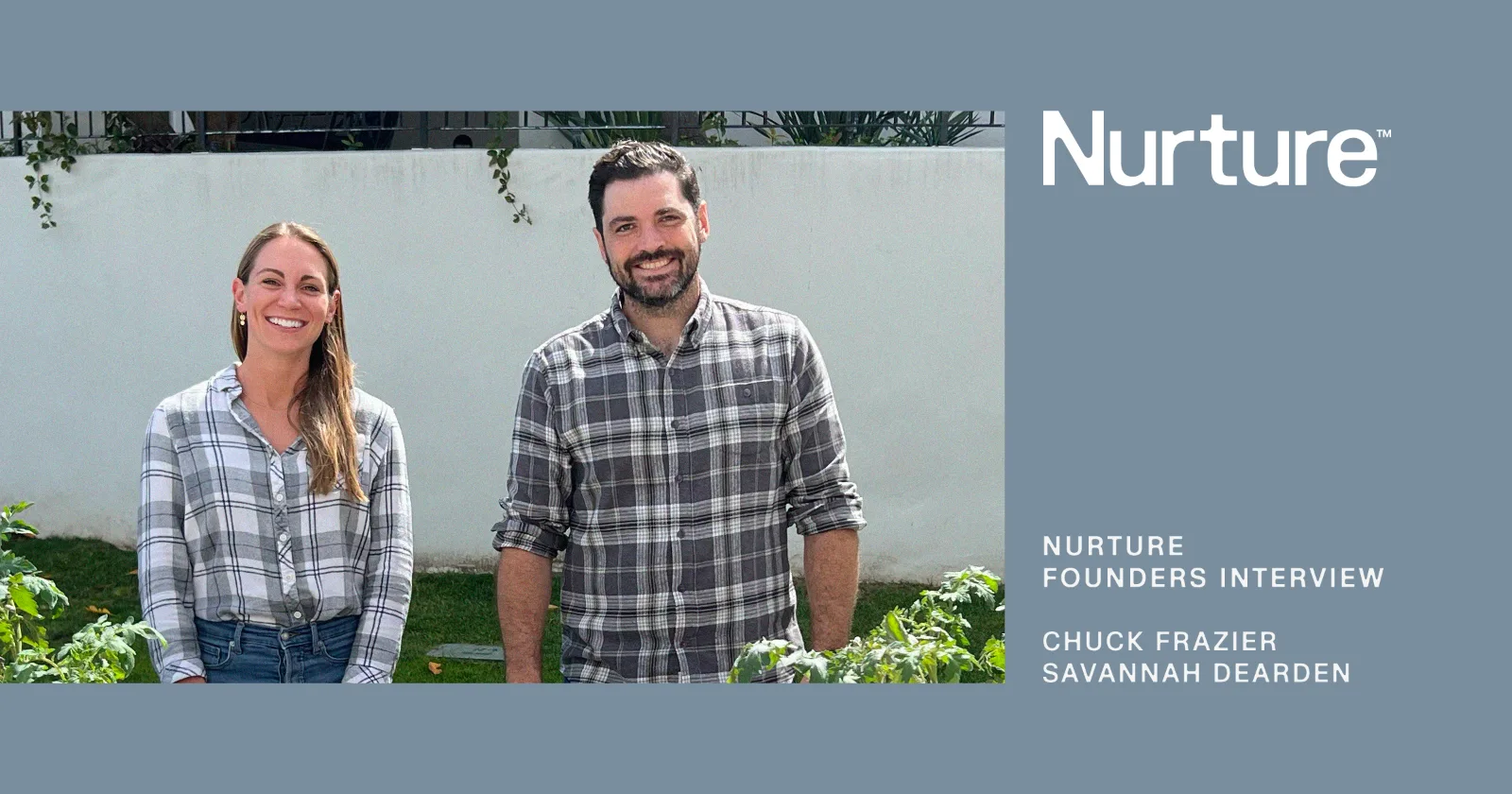
Chuck and Savannah have worked together for a decade across three companies: Apeel, Temporal Agriculture, and now Nurture. The Nurture founders share how a question about avocados led to an epigenomics company, what the field keeps getting wrong, and why we are entering the age of epigenomics.
It started with an avocado.
Chuck When I was working with Savannah at Apeel, I found that she had this incredibly deep curiosity for the way the world worked, and the surface was not enough. This question started this whole thing: why does a Hass avocado from Mexico have half the shelf life of a Hass avocado from California? Same exact genetics, but behave completely differently.
And it would have been very easy to say, well, it’s probably something that’s different in the trees, right? But that continually pushing to dig deeper and deeper and deeper is really the thing that I saw in Savannah.
So when someone asks what you do, what do you actually say?
Chuck I always tell people I work in the field of epigenomics. Epigenomics is not the DNA sequence itself. It’s the structure of the DNA that dictates how your DNA functions. So it’s heavily affected by life’s experiences, exposures and interactions. And our goal is to take what’s already there and figure out how to transform it or reshape it so that it gives a particular desired outcome.
There’s a lot of familiarity with the field of genetics, right? Everyone sort of knows the genome, especially in the post-23andMe era. And there’s now enough knowledge of genetics that you can start to talk about all of the pieces that surround it in a way that helps people understand their own life. We know that our genetics alone are not deterministic. And that’s where the nurture comes in. This nature versus nurture idea is something that is very easily translatable and understandable even by a person who’s not in science.
Savannah My answer is pretty similar, but I often will use the phrase that we study the DNA shape, not the sequence. So instead of structure, it’s that concept of shape.
I also really like describing what I do in the vein of physical memory. Biological systems remember things through these encoded marks in the epigenome. This is a huge part of how living things adapt to changes within a lifetime. We really study that: how do we turn epigenomics from an observational science into one that can have technology that’s beneficial for us, the plant, and other living things.
The interest in this has lasted through three startups. Each time it’s evolved a little bit. It sort of went from “holy shit, there’s this whole world of biology that feels untapped, let’s look at it,” to “let’s figure out what technology we can build with it,” to now very much “building technology in this space is really, really hard and it shouldn’t be this hard. So let’s figure out a way to make it easier for everyone.”
Where’s the gap between how epigenetics is understood and where the science actually is?
Chuck There’s still an education that is ongoing for what epigenomics actually is. It gets lumped in with genomics, and they are inherently tied, but it really is about what your genome is doing, not just what your genome can do, which is what genetics is.
And especially in the startup community, there is this belief that epigenomics can do everything. It’s controlling everything about biology. That’s largely true, but the ability to actually go in and do anything you want to do is still really, really hard. There are a lot of longevity companies playing in the epigenomic space that are maybe promising that you can live until you’re 150 or beyond. It’s not there today. There’s still a pretty significant technology gap, a chasm that needs to be crossed. But the biological mechanisms are real so the promise is definitely there, and that’s what’s particularly exciting for me.
What’s the part nobody else is looking at?
Savannah Something that’s exciting for us, a space for us to innovate that we don’t see a lot of other people looking at quite this way, is this component of time.
Most people look at genomic model prediction as: what else can I predict about the system at this time point, based on having a limited amount of information? A lot of the big foundational models that people are building do that. They have some piece of information and they predict the rest of the system. That is super powerful.
But the questions I’m more interested in are: I have a snapshot of the system. How do I predict from this what the past was, and then what the future is? They rely on each other. Cell state in its current form has a future that’s reliant on its past state as well. It’s not just a snapshot of your genome, or of your health, or even the epigenome at one time point, but really the potential state now and in the future.
What’s an example of that?
Savannah The propensity for cells to become cancerous is one tangible example. The path to becoming cancerous is known to involve a series of changes to the epigenome. At any snapshot in time there are some marks that could predict that a cell may be going to go down one of these paths. But the exact combination of marks that have accumulated are dependent on what a cell has experienced previously. They are dependent on the path already traveled. So it’s effectively an accumulation of memory, that’s creating these tipping points into different cell states over time.
Chuck What’s fascinating about the epigenome is how dynamic it is. This is what makes it hard to predict, and makes it very much unlike genomics. A great example is circadian rhythm. Your epigenome is changing based on your light exposure throughout the day, and that is priming your body for sleep.
Another good example is PTSD. There are some great twin studies where they identify a genetic predisposition for PTSD based on shared DNA. But unless there’s a triggering event that causes a shift in the epigenome, you won’t actually get PTSD. It’s not like if you just have a genetic predisposition, you’re going to get PTSD. There has to be something that happens. And they can tease that out from twin studies where one has PTSD and the other doesn’t.
Savannah A lot of the epigenomics therapy companies so far have a clear “this mark is correlated with obesity,” or “correlated with high cholesterol.” We’re going to go change this one mark. That’s a very clear input-output equation. The questions I’m more interested in are these nuanced time-bound trajectories that epigenomics can unlock.
Where did the name Nurture come from?
Savannah We were brainstorming what really got us excited about epigenomics and we both kept landing on the role the epigenome plays in cellular memory and adaptation. That ability to look outside of the nature of what creates an organism just in its DNA, and start to talk about how you can encode adaptation or design nurture.
That concept, how do you understand and design for nurture, piques the curiosity of how does biology do that? And the answers lead you to how crazy is it that this is how everything living works?
The mechanisms driving the natural world are so beautifully complex and intricate. We were like, oh yeah, biology is encoding nurture. How does it do that? How do we learn from it? How do we build technologies that complement that, or do the same?
And so that’s where we landed. It’s not just nature. It’s also nurture.
What was the hardest call you’ve had to make together?
Chuck The decision to shut down Temporal.
At Temporal we built this incredible technology that could prime plants for heat stress. We saw a 50% improvement in yield in tomatoes, even without heat stress. A massive yield benefit, which for farmers is amazing. And we had two farmers we were working with who loved the technology, had us out there on their farms, gave us some space to play.
And there was this disconnect between the technology that was working so effectively, and the regulatory landscape that was going to allow us to bring that technology into the world. We fell in this crack between what the USDA regulates and how they think the ag world should be, and EPA and how they regulate and how they think the ag world should be. Neither was in agreement, and both were arguing over who got to regulate us. Which is ultimately what led to the shutdown of Temporal.
But what made that decision really easy for us was going back to first principles of why we started Temporal in the beginning. We had become fascinated by this world of epigenomics from Apeel. And Temporal was the next logical step in taking that observational technology and making it actionable and deliverable to farmers. But at its core, it was epigenomics.
The promise of epigenomics and what it could do for the world of biology, that’s what got us excited about working in this space. So once we went back to first principles and had several conversations about what we thought we could build next, it became pretty clear that making epigenomics easier for everyone was the next logical step for us.
Savannah In hindsight it’s not surprising, but it’s funny how quickly we went from “this is what we have to do” to “what do we do now?” There was no “this is it” kind of conversation, really. Even some folks who were exposed to the whole journey were like, “do you guys need a breather or anything?” And we’re like, “no, no. We know what we want to do next. We’re ready.”
Why build at the infrastructure level?
Chuck We’re building the tools that we wish we had at the two previous companies. It was a problem that Savannah and I were uniquely positioned to tackle because we felt the pain of building.
I think about this in terms of the transformation the genomics field has gone through over the past 30 years since the Human Genome Project. It started out that it would take you 10 years and millions of dollars to sequence one genome. Now there’s a world where you can sequence a whole genome overnight for less than $100. And then with CRISPR you can go edit that genome the next day in the lab.
That transformation hasn’t come to the epigenomics field yet. It’s still exceptionally hard to find where you’re going to make these epigenomic changes, to design the tools so you can actually read the epigenome and understand the changes you need to make. And then the actual remodelers to go in and change it. All of those pieces have to work together when you need to achieve a particular biological outcome. You can’t just build one without having the others in place, and they all feed back into each other.
So it became this recognition of what was going to bend that cost and time curve. How do you bring the cost down? How do you bring the time down, so you can get there quicker?
What’s actually challenging about this work?
Savannah I’ll speak from direct experience. I was mostly working initially with avocados, which have a beast of a genome that was not annotated very well. A lot of plants have really interesting repetitive and duplicated regions of their genome that make them hard to study. Just holding a plant genome in memory and running analysis on it is a behemoth of a task.
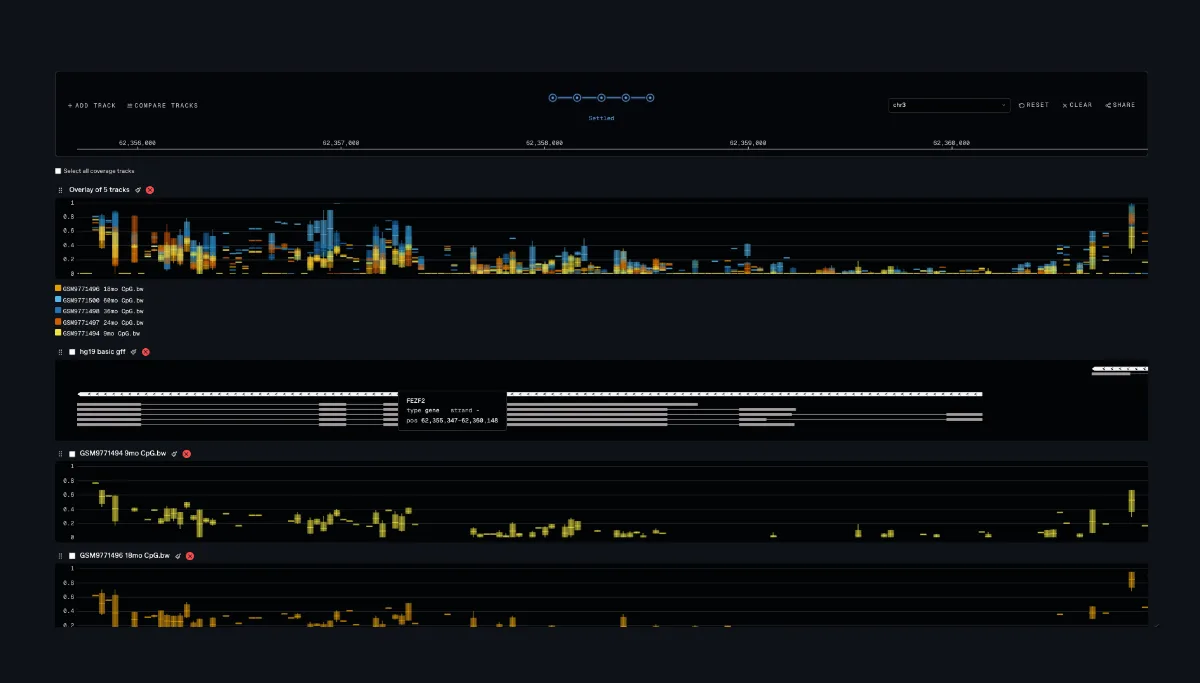
And then to go and ask multiple layers of questions around that, which is what epigenomics requires: not only here’s the genome, but here’s where the methylation marks are, here’s where the histones sit, here’s where the marks are on the histone. So you’re layering these tracks of data on top of each other. Doing that eight years ago when I was at Apeel was incredibly tedious, incredibly challenging. You could only really ask questions about one little part of the genome at a time. And that only lets you get one question-answer set at a time.
That’s effectively what we ended up translating into Temporal, really focused on heat stress in crops. Again, a narrow question-answer set. And in the process of that, I got really excited about what we could do if we could more globally answer these questions. Building tools to tell us where we should we focus, instead of basically having to guess and check.
So Tellus provides that opportunity: to hold genomic data and epigenomic data in a way that lets you have these more advanced question-and-answer sets. It really takes some of the painful ickiness of bioinformatics, and just handling big data, out of the equation. Such that you can get to the fun part, where you’re playing with signal and finding interesting things out about your system faster.
Chuck What’s really remarkable about the field of biology right now is that experimentation has gotten so fast. Sequencing has gotten so fast. But there’s still this in-between that can be painfully slow.
You’ve done all your data collection, but actually interpreting that data to figure out your next experiment is where the pain sits for a lot of our customers. It may be a scientist who doesn’t code, or doesn’t want to code, who has to pass that data off to a bioinformaticist to process and analyze it. That’s a lossy process of information transfer. Or it’s that waiting period. The scientist just ran that experiment and is itching to get to their next one based off the information from the previous one. But that could take weeks.
We’ve heard from some of our customers that are selling tools for epigenomics, and it’s maybe months before that customer comes back to order again, because they’re having a difficult time processing all that data and figuring out what their next step is. There’s so much loss in time and added cost when the processing and analysis of data is not quick.
Does that displace bioinformaticians?
Chuck Tellus working at full bore makes scientists more effective and makes bioinformaticists even more effective. It offloads some of the basic stuff that bioinformaticists might do for scientists, and allows scientists to get to the next experiment. But for bioinformaticians it’s a super tool. Accelerating the iteration cycle is a win for everyone.
Savannah It lifts the floor and the ceiling at the same time.
Is there a piece of biology you’ve run into that you found genuinely beautiful?
Chuck What started us down this whole journey was a paper we found that was studying mice exposed to alcohol during adolescence, and what that did for them in adulthood. Ultimately it created a propensity for alcoholism and increased anxiety. The paper showed that behavior was associated with one epigenomic change. And if you went in there and reversed that one change that occurred from adolescent alcohol exposure, the mice basically completely lost their propensity for alcoholism and their anxiety.
So it was this first example I read of the role that epigenomics plays, based on the behaviors you had earlier in life that manifest much later in life, and how those marks, that biology, can be reset back to an earlier state to almost erase that particular exposure.
I thought it was a really beautiful example of the reading of the epigenome and the changes that occurred, understanding how that epigenomic change cascades through biology and manifests itself in a particular behavior, and then going in and remodeling that so you can reset it back to a state that reverses it. One very clear example, but it really painted some of the beauty and the possibility of what could be if you had the right tools in place.
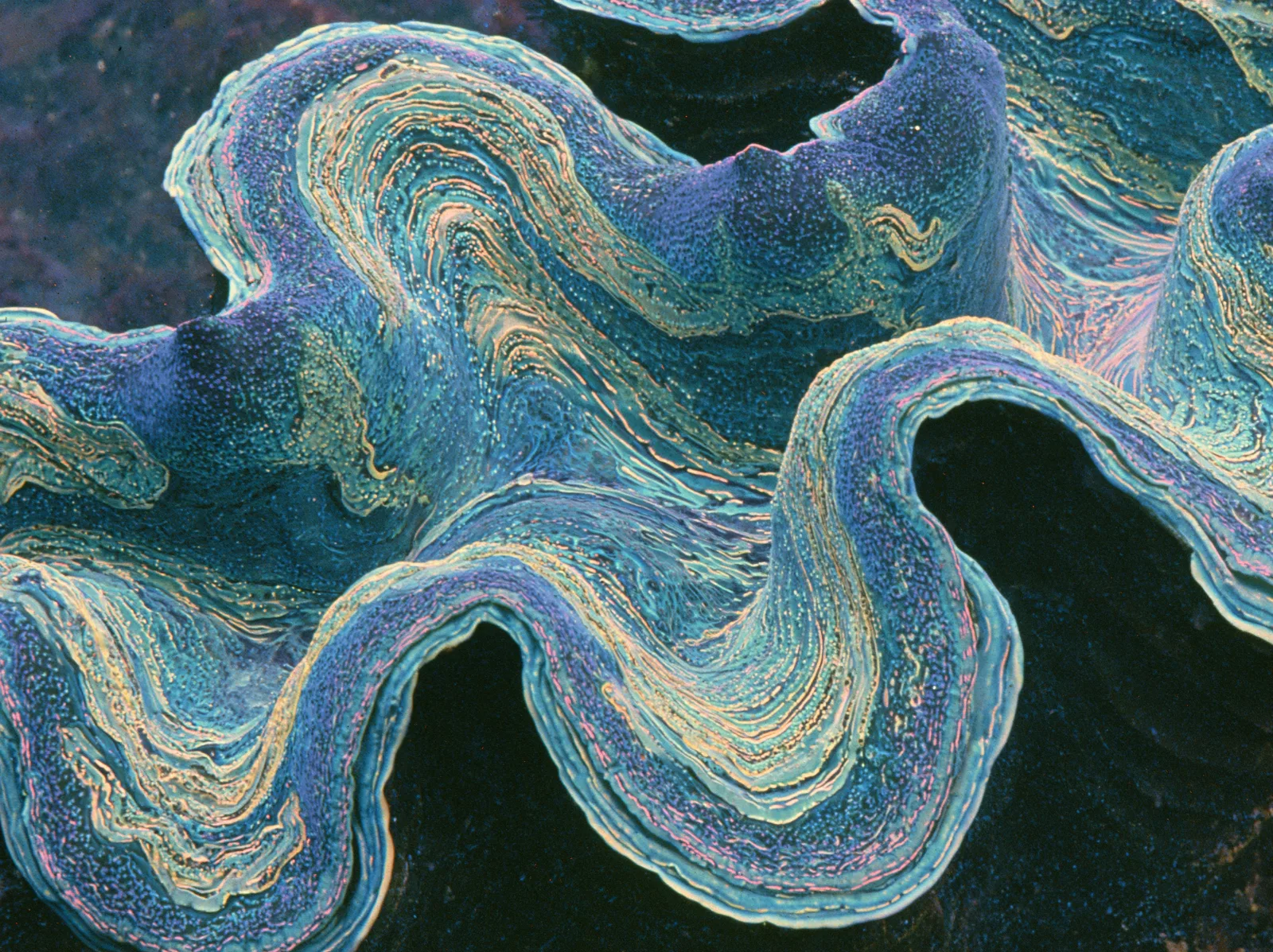
Savannah This is such a hard one, because I am so fascinated by so many things. The things that tend to be the most beautiful to me are the ones that don’t fall in a particular bucket. They warp the edges of what we typically think of as biology, or physics, or self and nonself.
So in particular, there are a lot of studies around how symbiotic relationships shape the behavioral patterns of organisms, and how that actually translates into epigenomic mark changes. Where is the end of one thing and the beginning of another? The smaller you take that, the blurrier those edges get, to the point that it’s kind of all just one living thing.
And then the redundancy in how living things work at that level is also really fascinating. The way that our epigenome operates is incredibly similar to a butterfly, octopus, or a yeast, and even pretty similar to how dinosaur cells encoded memory. Truly at the living code level, we’re all quite similar.
Can you give an example of the symbiotic relationships?
Savannah I studied biophotonics in grad school, so my favorite examples tend to be underwater ocean creatures.
There is a giant clam that has really beautiful coloring. If you look at the clam when it opens, the fleshy part of the mollusk has really bright iridescence. And it turns out that’s not only just pretty. It actually reflects light inward, to algae inside of it that are helping to make food for the clam. And it only reflects the particular wavelengths that the algae needs. So it’s specifically evolved this microstructure that’s basically a tunable reflector, reflecting light in for the algae. And then the algae don’t need a bunch of processes that they typically would need. They’ve evolved out of them, because they can now capture this really specific wavelength of light from this clam.
That’s an extreme example of how biological citizens work together. But even our gut microbiota releases things that then affect our intestinal histone marks. So there are these little examples of how we’re not one thing. We’re actually a bunch of little things combined together.
What do you believe about epigenetics that isn’t conventional wisdom yet?
Chuck I’d frame this in the context of the market as a whole. I believe we are entering an epigenomics age.
If you count the last 30 years of history as the genomics age, where we made these incredible discoveries around the structure of DNA, the sequence of DNA, and how that translates into biology, now we are entering an era where you can truly understand the nature of being based on not just the sequence. Maybe the nature and the nurture of being.
That’s going to unlock a massive new area of biology. Just like every biology company has now become a genomics company, every biology company will become an epigenomics company. These types of techniques and methodologies that inform how the thing they’re developing is going to show up in the world will incorporate the epigenome into that calculus. And because it’s so dynamic, and because it has so many levers that control biology, it’s going to be probably an order of magnitude more impactful and valuable than the trillion dollar genomic age was.
What are you excited about in terms of the team?
Savannah This team is very uniquely curiosity driven. We get really excited about answering hard problems, and it shows up in our attitudes around asking the next question. It’s not good enough just to make something work well superficially. You want the inner workings to be mechanistically sound.
That shows up in both how we build the software and the lab tooling. Really being excited to know how it works. Not that we have to know how it works, but we’re excited to know how it works, and not doing that at the compromise of speed, either. This whole team likes to run at things. It’s fun to have day-to-day things be so different, because we made them different from yesterday.
Chuck I’ll just double down on the fact that this is a team of people who want to solve hard problems. They want to dig in, figure things out. They’re not afraid of how difficult this field is to work in. They look at that and they say, well, let me figure out today how I can make it a little bit easier tomorrow.
That comes from the folks on the software side who are constantly improving Tellus and making it more useful. And also from the lab side that says, hey, how do I double the scope of my experiments, in half the time?
Savannah We’ve all worked together at previous startups at this point. This entire team has overlapped with us to some degree, whether it was Apeel or Temporal. A team of people who have lived a startup and chosen to live it again and again.
What keeps the partnership working?
Savannah I did not take the thought of starting a company lightly. There are not many people I would do this with, unless I had seen them through a lot of hard things.
Chuck has an attitude that I also share, where the hard things are hard, but that’s also what we’re here for. We’re here for the hard things. So when stuff gets really hard, it’s not a bummer. It’s almost exciting. It’s like, oh wait, here’s the next hard thing we get to do. I don’t think you can do really high quality science or company building without reveling in the hard things.
Chuck I wouldn’t go so far as to say that we think about things similarly. I would say that we understand how the other person thinks, which is more important.
What has worked well for us over the years is there’s a comfort in bringing a half-baked idea, or even a fully baked idea, and offering it up to the other person to say, hey, let’s beat this up. I’m not going to take it personally if you think this is a terrible idea and you tear it down. And that comes with a perspective on what each of us are good at, and that informs how we break that idea down. So at the end of the day it always feels like, no matter who brought the idea, it emerges as something that is ours. Not just one of ours individually.
Nurture is building the infrastructure for epigenomics: tools to read it, software to understand it, and systems to remodel it. Tellus is in beta. Request access if you want to run your own data through it.