Why AI Can't Nurture
The persistence of awe.
This past year, I set a goal to visit all of the national parks in California. Of all 50 states, California has the most national parks, with nine. With only two left to go, I know this year will be one of my most cherished.
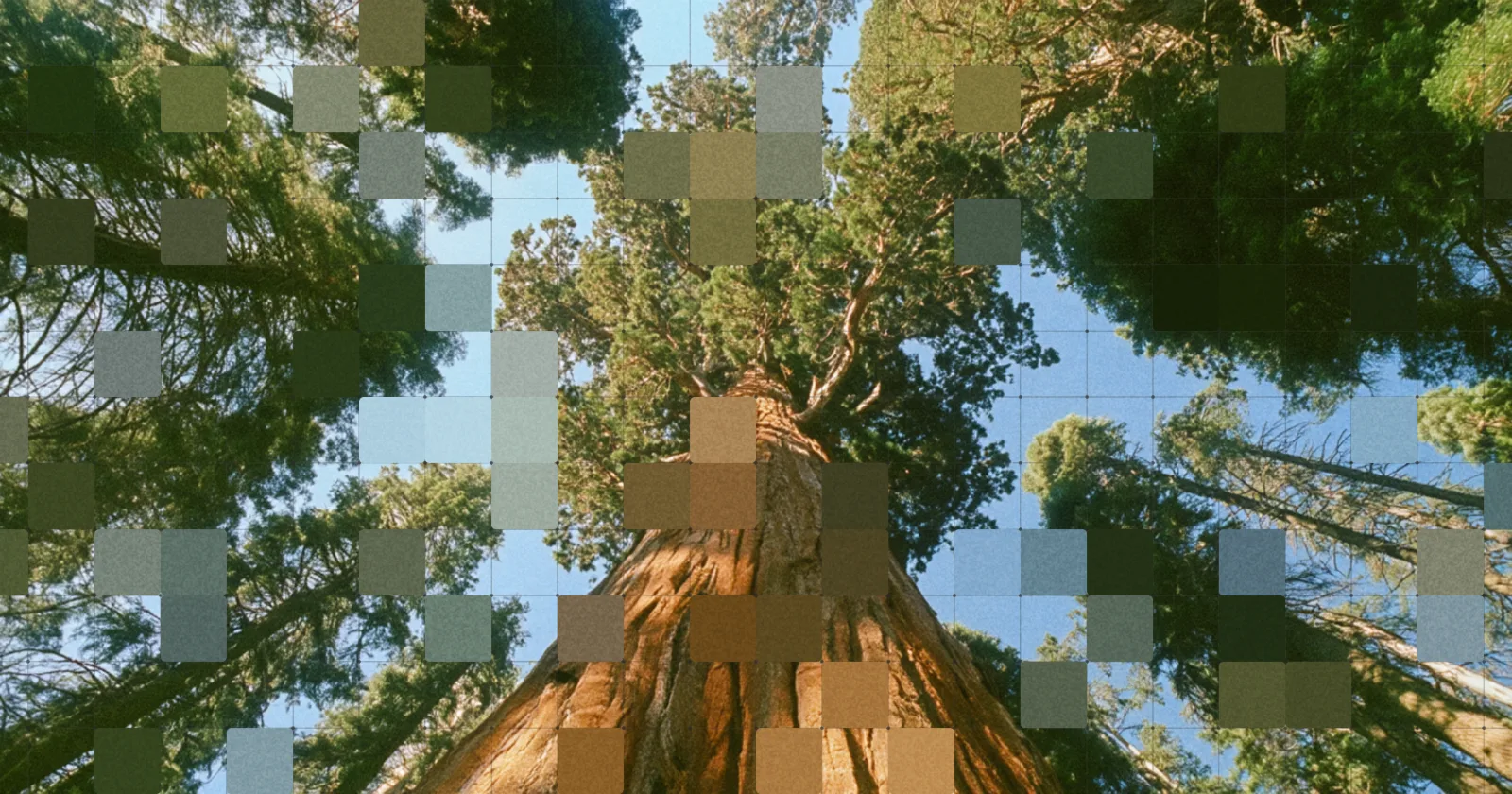
My training is as a plant biologist but my fascination with biology extends well beyond organisms with chloroplasts and cellulose – those that fall on the green tree of life. I carried my fascination with biology to every new national park that I went to. At every park, there were distinct moments when I was struck by the life around me. Once it was due to the sheer grandeur of life, like when I slowly looked up at the giant sequoias from the root to the crown in Sequoia National Park. Giant sequoias are the most massive trees on earth and are estimated to live up to a thousand years. Another time it was due to the resilience of life, like when I learned about the Devils Hole pupfish in Death Valley National Park, a tiny fish that survives in a single water-filled cavern in the desert, one of the smallest ranges of any vertebrate on Earth.
Both times I asked myself, how is it that life has evolved to exist this way? What is the driver of all of the biological diversity and how do we make sense of it?
I often find myself in awe of the beauty, diversity, and complexity of biology.
The simplicity of four letters
Underpinning all of the diversity, all of the beauty, and all of the resilience of life is the same, relatively simple code: DNA. Every living organism’s DNA is written almost entirely in four letters: A, T, G, and C, each representing a single nucleotide. Together, these nucleotides make up our genomes, which are regarded as the blueprint of biology.
Though the composition of our DNA is relatively simple, the size of genomes can range drastically from about 50 thousand letters in some tiny microbes1 to roughly 160 billion in a small fern2, about 50 times the size of the human genome (3.1 billion3). To this day, we continue discovering organisms that push these boundaries, and with that, our definition of what blueprints can sustain life.
The complexity of four letters
When the first human draft genome was published in 20014, it felt as though we were on the brink of understanding life and that the eradication of all diseases was right around the corner. If the operation manual of life was written in DNA, changing the words must be the answer to life’s challenges. In some instances, this proved to be true, but overall, our understanding of the DNA code has fallen short of revealing all of biology’s secrets.
The role of DNA sequence as the driver of life and its differences is called into question especially when we compare genomes across organisms. Similar looking organisms should have similar looking genomes and vice versa. A prime comparison is that of humans and the other great apes. Humans and great apes diverged from one another tens of millions of years ago. Despite stark differences among the apes and humans, they share roughly 85 to 99 percent5 of their genomes. Even within the same organism, the DNA sequence contained in each cell is not nearly the whole story. A cell in your eye and a cell in your liver carry the exact same genome, and yet they are structured and function entirely differently.
So how could it be that organisms and cells with almost identical or identical genomes can look and behave so differently?
This is because DNA is not nearly the end of the story of life (it may not even be the beginning). Life rests in a blanket woven from intricate threads of biology, each built of intertwining layers of chemistry and physics. The number of interactions happening inside a single cell at any moment is almost impossible to fathom.
Taking a step back, we can return to the central dogma and roughly sort the main layers driving biological complexity. The first layer is the genome (DNA), which is transcribed into the transcriptome (RNA; the second layer), which is translated into the proteome (proteins; the third layer). The interaction of these layers for billions of years is what has allowed for the complexity of life that we see today.
To these layers we can continue to tack on more layers, say, the metabolome, the small molecules that fuel and signal within cells or, the interactome, which proteins interact with one another.
And then there’s the layer that is near and dear to us here at Nurture: the epigenome.
A driving layer of complexity resting on top of the genome
The epigenome is what allows a multicellular organism to coordinate and orchestrate various cell development and differentiation patterns, despite every cell carrying the same genome. It rests on top of the genome (“epi” == “upon”), acting like a set of bookmarks that determine which genes can be turned on or off, how quickly, and to what degree. These bookmarks include chemical tags on DNA itself and on the histone proteins that DNA wraps around.
The biologist Conrad Waddington coined the term “epigenetics” in 19426, more than a decade before we knew what DNA looked like. For decades, we could only infer the epigenome’s influence. Fast forward to today and we can now map these marks across entire genomes. We now also have new molecular tools that let us begin to write the marks, not just read them, to the point where we can remodel the epigenome.
Yet so much remains unknown: how do the combinations of epigenetic marks translate into a cell’s behavior or identity, how stable they are, and why the same mark can mean different things in different contexts. The epigenome is one of the ways life adapts without rewriting its DNA code, and understanding it gives us a powerful new lever to building a healthier, more resilient world.
Still, the epigenome may only be likened to the weft that makes up the rich tapestry of biology. We need better tools to characterize it, better tools to perturb it, and better tools to interpret what we find so we can make the next decision.
Hard-sought levers in the complexity
What amazes me most is not only the complexity of life, but that curious humans continue to find ways to make sense of it. Despite all of those layers, scientists keep uncovering powerful levers that unlock our ability to study biology and to use what we learn to advance us as a society. Sequencing allowed us to read genomes, which eventually led us to gene editing letting us rewrite them, which will in turn lead us to the next lever. Each lever opened doors that we didn’t know existed, and each one came from people willing to stare into the complexity and ask, “What if?”
Not everything fits in a 96-well plate: AI and Biology
The impact of AI on daily life is palpable. We see it when we search the web, at our jobs, in our ads, and sometimes, even in our art. AI will keep advancing, and it’s already changing how we do science. But it won’t replace experimentation.
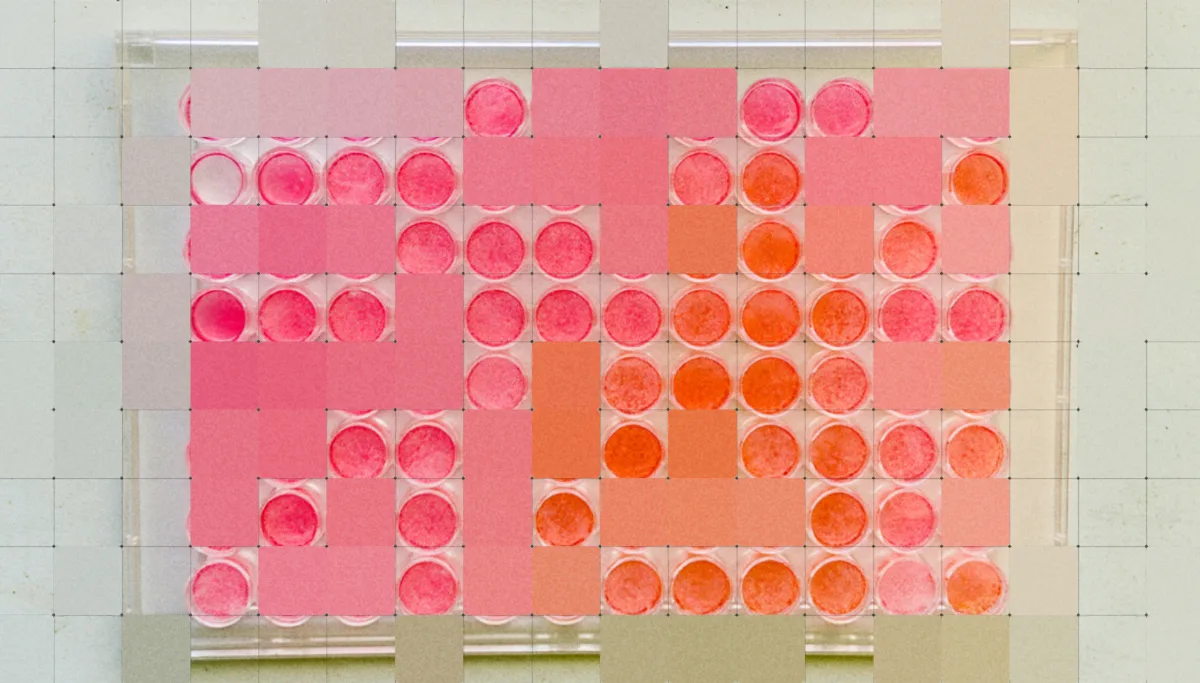
The bottleneck in biology is still the need to ground-truth our discoveries. Unlike mathematics or computation, biology isn’t a closed, fully defined system. It’s the product of billions of years of evolution, full of exceptions and surprises. Models can help us predict which experiments are worth running, but someone still has to design them appropriately, run them effectively, and decide what to make of the results. Not to mention that choosing which questions are worth asking in the first place is still a deeply human skill. As a scientist who values both high-throughput experimentation and the ingenuity behind AI, I also know that not all of biology fits into a 96-well plate.
Some aspects of biology may be a long way from having the data AI needs to model them effectively. AI is only as good as the quantity and quality of experimental data it learns from. To take full advantage of it, we need much more of both, especially for the layers of biology we understand least.
The Nurture in our Nature
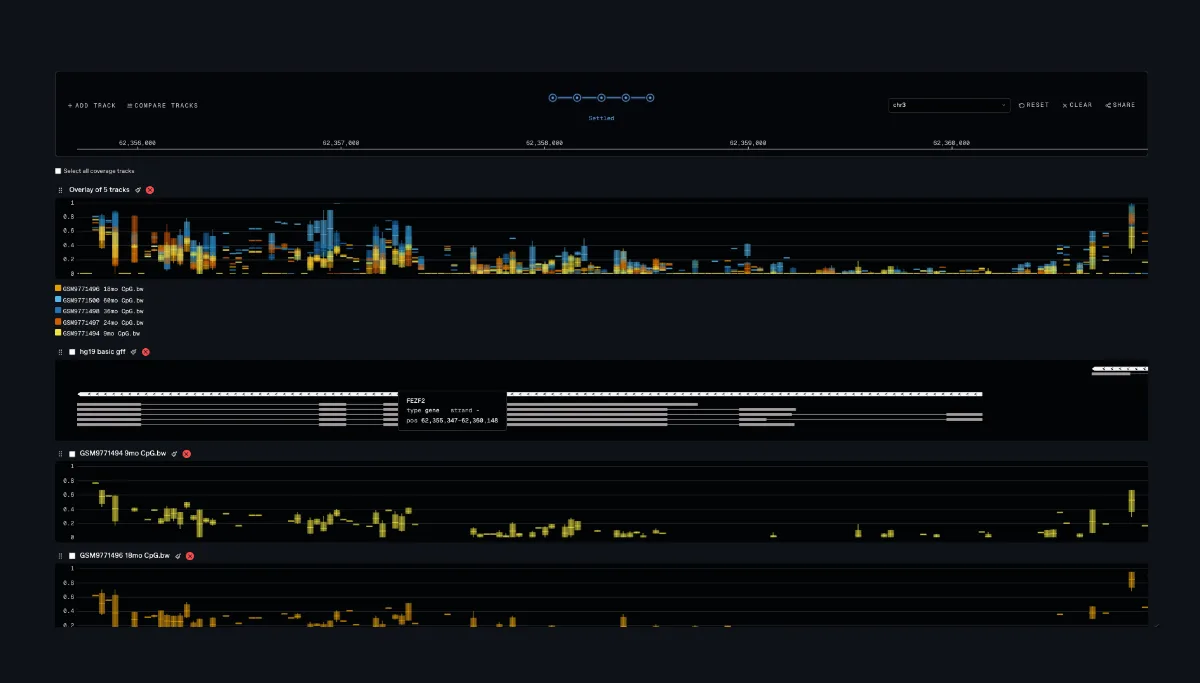
Whether you work in yeast, plants, bacteria, mammals, or medicine, scientists all share the same challenge of an overwhelming amount of data. The epigenome makes this especially clear, because studying it is inherently multi-omic, multi-track, and multi-layered. To understand a single mark, you need to know the DNA sequence beneath it, which genes are being expressed, and what the cell is producing as a result.
At Nurture, we’re working on both sides of this challenge. In the lab, our goal is to increase the output of high-quality data for the epigenome, generating genomic, transcriptomic, metabolomic, and epigenomic data. On the software side, we’re building a hub for scientists, a place to process data more quickly and reliably, and to stay connected with one another. Imagine the analysis and visualization typically performed in RStudio or Jupyter Notebook without needing to code, the file sharing and collaborative ability of Google Drive, and the community of LinkedIn and Instagram, all in one place and built for science.
True innovation often comes from marrying disparate fields. By bringing wet lab biology, software, and community together, we hope to help scientists spend less time wrangling data and more time asking the next big question.
Why I do this
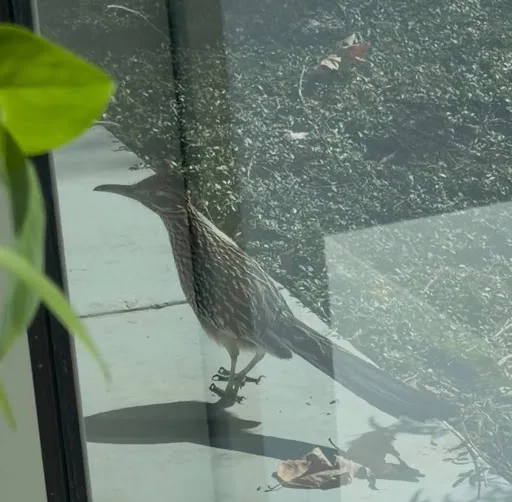
While writing this post, I was surprised by a Greater Roadrunner right outside my office window, a rare sighting here in Santa Barbara. It was a small reminder of why I fell in love with biology in the first place. Life shows up when you least expect it, and it’s always more interesting than you thought.
I chose science because I care deeply about my community and because I am fascinated by biological complexity. Progress rarely comes from one giant leap. It comes from one person, on one team, at one company, adding one more piece to the puzzle, and from all of those pieces together, driving us toward a better understanding of the world around us.
Biology may currently hold more complexity than we can fully grasp, but I hope it continues to fill us with awe as we continue to try.
Footnotes
-
Michalik, Anna, Diego C. Franco, Junchen Deng, Monika Prus-Frankowska, Adam Stroiński, and Piotr Łukasik. 2025. “The Tiniest Genomes Shrink Much Further: Extreme Reductive Evolution in Planthopper Symbionts.” bioRxiv, ahead of print, May 21. doi:10.1101/2025.05.16.654412 ↩
-
Pol Fernández, Rémy Amice, David Bruy, et al. 2024. “A 160 Gbp Fork Fern Genome Shatters Size Record for Eukaryotes.” iScience 27 (6): 109889. doi:10.1016/j.isci.2024.109889 ↩
-
Yoo, DongAhn, Arang Rhie, Prajna Hebbar, et al. 2025. “Complete Sequencing of Ape Genomes.” Nature 641 (8062): 401–18. doi:10.1038/s41586-025-08816-3 ↩
-
Venter, J. Craig, Mark D. Adams, Eugene W. Myers, et al. 2001. “The Sequence of the Human Genome.” Science 291 (5507): 1304–51. doi:10.1126/science.1058040 ↩
-
Yoo, DongAhn, Arang Rhie, Prajna Hebbar, et al. 2025. “Complete Sequencing of Ape Genomes.” Nature 641 (8062): 401–18. doi:10.1038/s41586-025-08816-3 ↩
-
Waddington, C. H. 1942. “The Epigenotype.” International Journal of Epidemiology 41 (1): 10–13. doi:10.1093/ije/dyr184 ↩
Nurture is building the infrastructure for epigenomics: tools to read it, software to understand it, and systems to remodel it. Tellus is in beta. Request access if you want to run your own data through it.